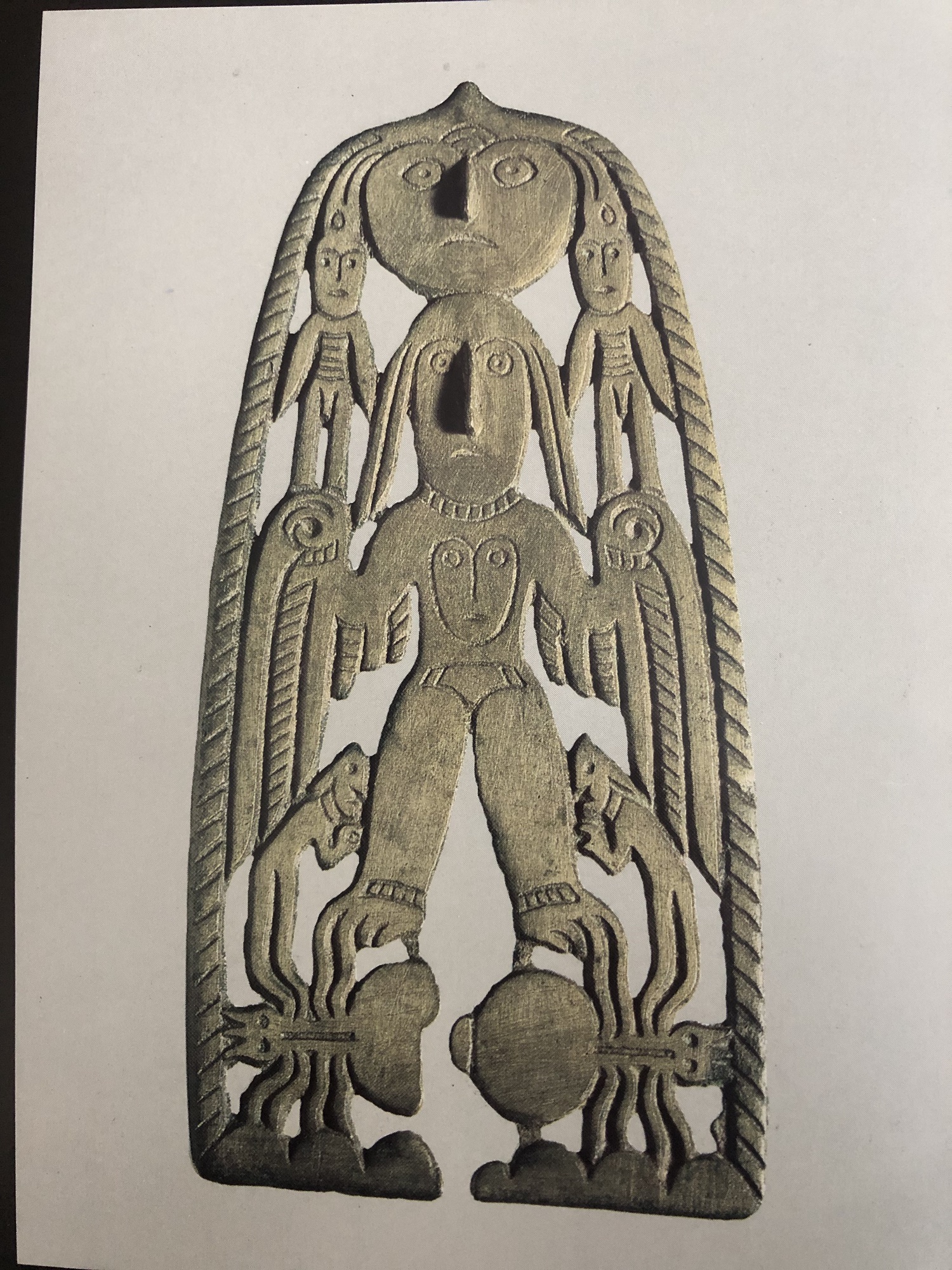
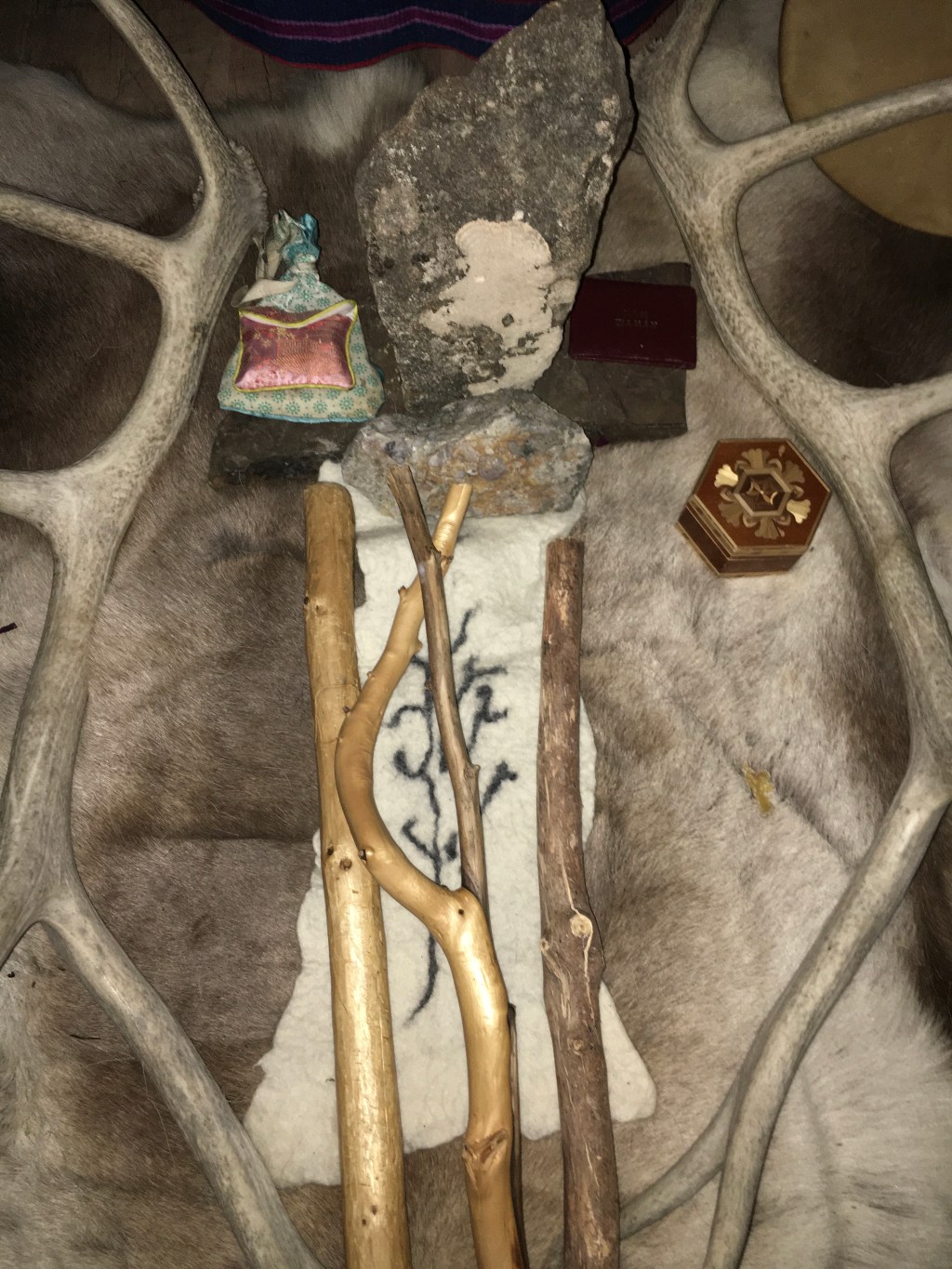
A look at a few books from indigenous writers, a Seven Sisters exhibition
Now I know for sure

how Earth,

our Mother

the one who holds

grows

nurtures

receives back into her bosom,

her belly, her heart

tends with her sisters

keeps safe

hides

holds

feeds

reminds me

Home is where the heart is.

The heart is in Her.
I am reading a book:

Myths, Tales and Poetry from Four Centuries of Sámi Literature. An Anthology edited by Harald Gaski, published by Čálliidlágádus, 2020
Thank you to the stories of indigenous peoples of the North, hunters, gatherers, herders, fisher people, having a language still full, handcraft duodjii full of stories telling the knowledge and remembrance of honouring above below and in between. The remembering and oral stories of the lay of the lands, waters, bogs, sand pits, bare mountains…. and how folk moved and how one behaved. Perhaps these are some of the meanings of indigenous? If you have not the stories – the language, diaspora and displacement? I do not know. I am just a bystander who feels fiercely for these ones who are always having to explain their existence, and what is the difference between being Sámi and someone who arrived in the 1600s when there was a free-for-all land grab thanks to a king in Denmark who owned Sweden….Norway perhaps partially… and let us not forget the Russians who were colonising also. All pushing back.
The Heartbeat
“When the Sámi people were created, the Creator foresaw that the Sami would face many difficulties and challenges in their existence. So in order to help them endure and give them faith for the future, the Creator placed a living, beating heart of a two year old reindeer cow beneath the ground. Then whenever they felt threatened, the Sámi could lay their ear to the ground and listen for the sound of the beating heart deep within the earth. When they could hear the heart beat, the Sámi knew there was hope for them, and they they would survive. These events connect the Sámi people with Mother Earth and teaches them to respect the earth, which is a living being with a breathing heart. In order for the heart to continue beating , people must treat Earth with respect. The young reindeer cow, vuonjaláldu, has also held an important place in Sámi culture, since she offered up her own heart so that the Sámi might have faith and hope.
Exactly who the Creator was in ancient Sámi belief is unclear, since many traditional Sámi beliefs have been lost through assimilation and a long history of suppression of Sámi values and worldview. … instead of referring to this as a religion or “pre-Christian beliefs,” it is better to regard these narratives as reflections of the values Sámi held, the things they revered and honoured. …” p. 46-47
Arises for me is how people in the past were somehow stupid not developed (thinking also about Neanderthal), savages, primitive and shut-the-f up PAGAN!!! To learn how far colonisers of scientific, adventurer, religious, etc reached so far north to bring south texts which were in turn translated which apparently influenced a human who is credited with being the greatest influencer of his (he again) times. Gosh the things all of us steal and claim as our own creation. Gaski gives a grand adventure into part of the heart of Sámi peoples which when reading and getting a grip on that at least 400 years ago European folk were bringing their Sámi stories out of their lands – I wonder how much more has influenced non-Sámi peoples?
I am influenced. Peoples of all indigenous roots have a story about a heart beat in Mother Earth. The differences being in shape, size, story, colour, side-characters of how that heart got there. And is still beating, pumping life into all who are upon, within and above her.
Prayers for all folk to hear this, feel this AND understand the responsibility of taking care of a body – just like we take care of our body, or not.
Which brings me to another book: George Clutesi’s Stand Tall, My Son.
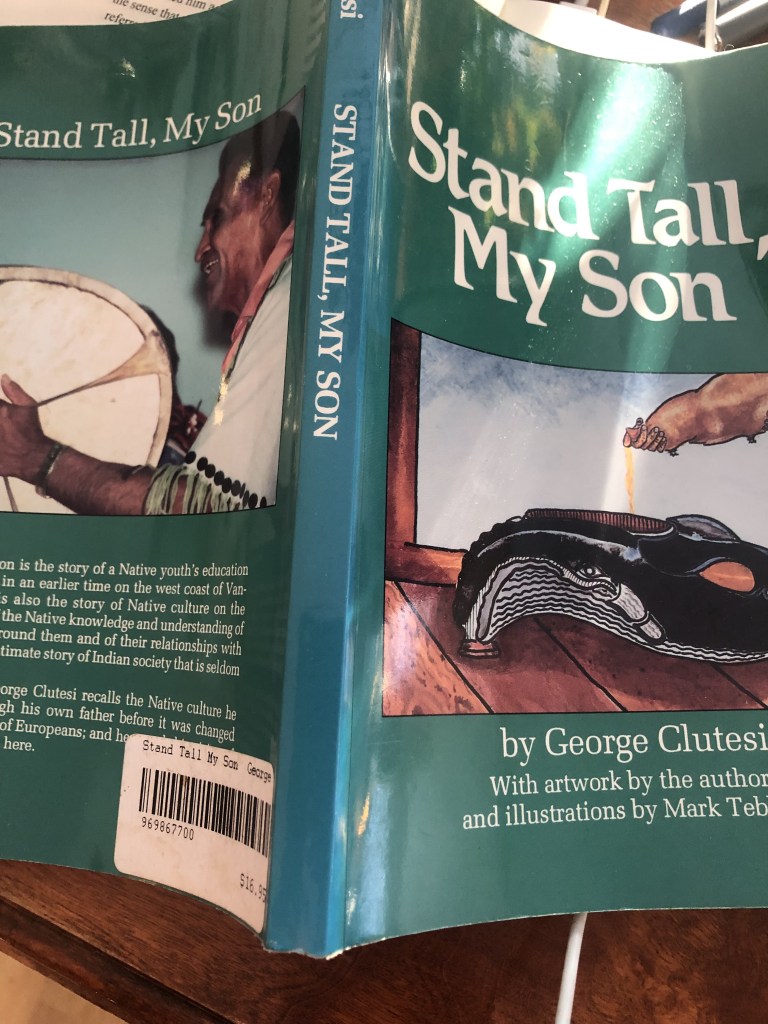
Copyright © 1990 Clutesi Agencies Limited
First Printing, May 1990
Second Printing, July 1994
Printed in Canada
ISBN 0-9698677-0-0
Here we have a lifeline for us all – about reciprocity and boundaries, preparing and fulfilling, not getting everything all at once and having to wait over years before some teaching, training, game, story, journey is given or made at the right time. But how this relates to the previous glimmerings of some sort of knowing with very limited abilities is that there Elder Clutesi tells how humans were to take care of their bodies because it was one way to honour Mother Earth, to be in service to your people (community, village, family) which was honouring Mother Earth. When you entered male adulthood you needed to be fit so you could catch/hunt/gather food and GIVE that food to the elderly- not just or only to your belly- and receive their stories and teachings (wisdom, history) and not stay with one of them too long, if at all!
The women- their are only side-hints as Elder Clutesi is speaking more of the male role amongst his people. Yet again there are references to fit, responsibilities or areas of responisibility.
Well, I have alot of work to do that because I don’t honour my body well enough. I do not move enough (Songlines of the Seven Sisters – those sisters were continually dancing even when being pursued across the land!!); I eat so strangely! My discipline could use some improvement, my taking in and carrying guilt or uncertainty or what will others think is tremendous. I am inspired by both books – and that exhibition – and perhaps something will stick within me and come forth this winter.
Hands up in gratitude, bowing to the fullness expansiveness contractedness of Joy of Life. Just give forwards – backwards – to others when you see need – when it is kindness and look in the reflection of stars, your mirror Earth and remember and honour and gift….. and one can keep boundaries like sand dunes and rivers and roots….
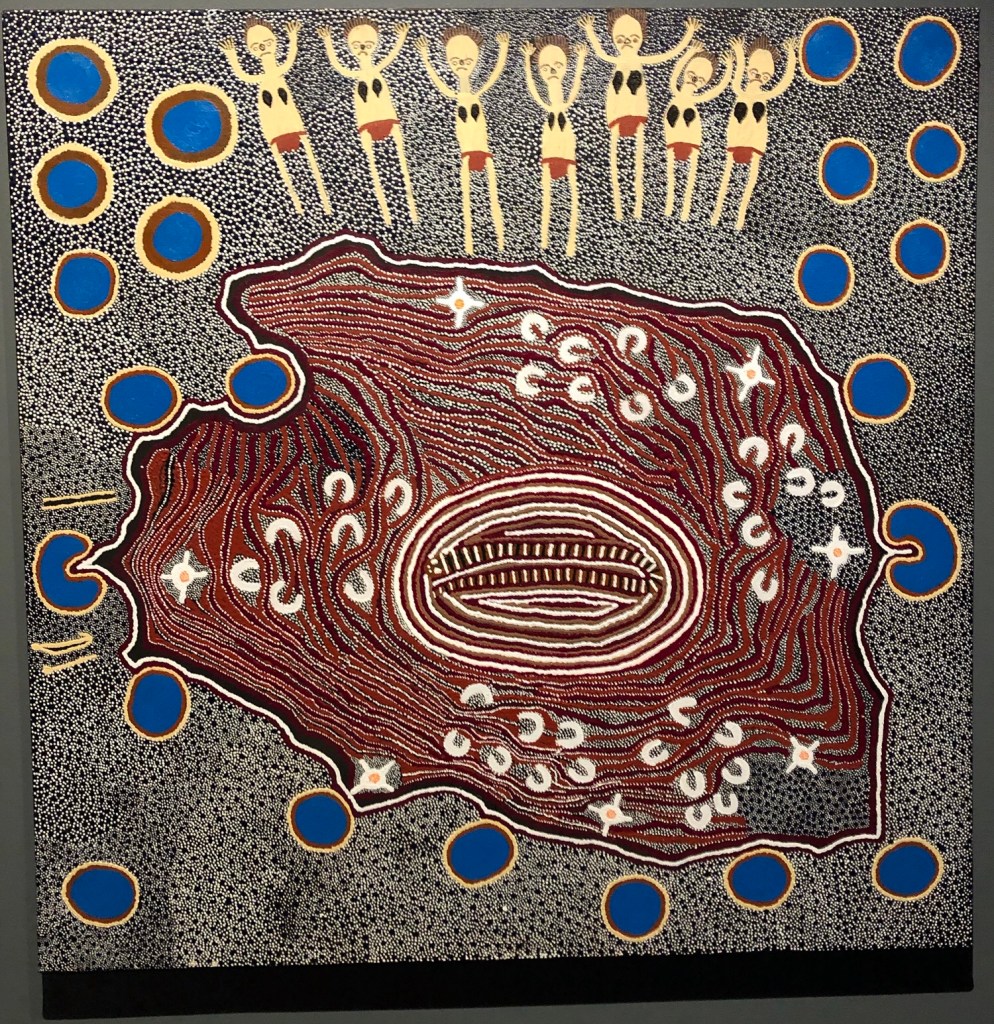
From the exhibition Songlines of the Seven Sisters, Vaprikki Museum, Tampere, Finland, 2024 Kungkarrangkalpa (Seven Sisters) 2016 by Angilyiya Tjapiti Mitchell, Papulankutja Artists Acrylic on canvas, National Museum of Australia
“This was before the big sister was taken by Wati Nyiru… the sisters found her [afterwards] and took her to a hiding place. They.. brought their big sister meat and food, and she got better.” Angilyiya Tjapiti Mitchell, 2016
Angilyiya paints the sisters looking for bush food, tasting the quandongs from the tree into which the shape-shifter Wati Nyiru has turned himself. Seven Sisters in Finland and https://songlines.nma.gov.au/
——-
Check out for Sámi:
Outi Pieski: Máttaráhku ládjogahpir – Foremother´s Hat of Pride– in English and Northern Sámi (my absolute favourite book). About her grandmother’s headgear found in British museum and reconstruction of this headgear through duodjii. Also on colonisation, repression, oral history! https://www.outipieski.com/installations-collages/mattarahku-ladjogahpir-foremothers-hat-of-pride/
Sámi history, dialogues, much writing! Veli-Pekka Lehtola: some in Finnish, a few in English and always in Sámi. https://www.veli-pekkalehtola.fi/en/
On duodjii: see Peiski. Also From research on Sámi handicraft to duodji research, Sigga-Marja Magga https://www.taylorfrancis.com/reader/download/2c1633c9-8f48-4bce-96d3-112233723f99/chapter/pdf?context=ubx She heads Giellagas Institute part of Oulu University https://www.oulu.fi/en/university/faculties-and-units/faculty-humanities/giellagas-institute
Best place to order Pieski book is from Siida Museum in Inari….https://siida.fi/en/ Best to just go there.
Clutesi book was bought on a magnificent road-trip up into Torino, Vancouver Island in 2012 or so? Probably still available. Anyone interested in raising boys into adults (not leaving them at just teenage years!) ought to read this.
North America – Turtle Island check out: https://www.tcikh.org/blog-seedstories/indigenous-owned-bookstores


 Christiana Aro-Harle
Leave a comment